Is Honey Good for Health? Benefits, Uses, and Nutrition Explained

Honey can be more than just a sweetener. It brings small amounts of nutrients, antioxidants and other useful properties, so there are real benefits of eating honey. At the same time it is a concentrated sugar, so use it with intention. Honey can soothe a sore throat, calm a cough and add flavour in small amounts, but it also adds calories, so do not treat it like a health tonic.
Nutrition Snapshot: What’s in a Tablespoon of Honey
Think of a spoonful of honey as flavour first, nutrients second.
- Calories and carbs: about 60 to 70 calories and roughly 17 grams of sugar in a tablespoon.
- Trace nutrients: tiny amounts of calcium, iron, potassium and some B vitamins.
- Bioactive compounds: polyphenols and flavonoids that act as antioxidants.
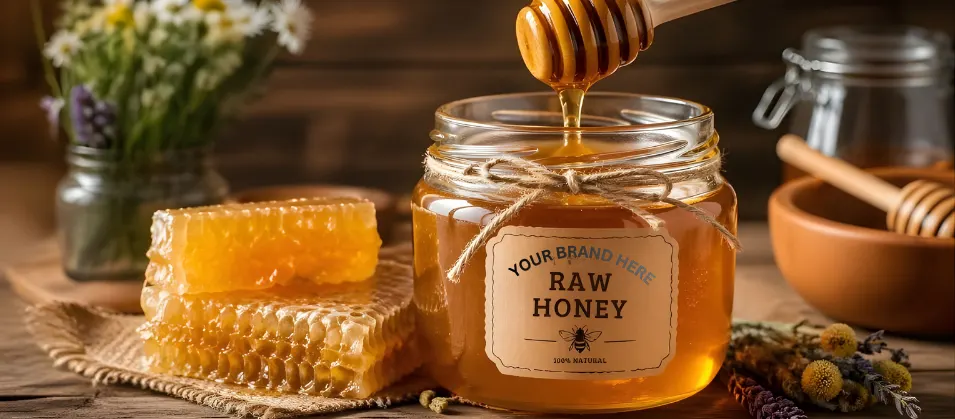
- Enzymes and pollen: more likely to be present in raw honey, and these can add a little character.
Raw honey tends to have more of these compounds, which is why people talk about raw honey benefits. Still, one spoon of honey is not a substitute for fruit and vegetables. It is a small, tasty boost rather than a nutritional powerhouse.
Which Honey is Good for Health (How to Choose)
If you are standing in front of a shelf and wondering which honey is good for health, here is a practical checklist.
- Choose raw or unpasteurised honey where possible, because it usually keeps more enzymes and pollen.
- Try single-origin or monofloral honeys, such as buckwheat or manuka, which often have stronger flavours and higher polyphenol levels.
- Pick darker honey if you want more antioxidants, since darker varieties often score higher in tests.
- Be wary of suspiciously cheap blends, which can be cut with syrups or heated until most benefits are gone.
If you can, buy small jars of different types and taste them. A stronger flavour often means more active compounds, and that can help you choose what you prefer.
Evidence-Backed Benefits (What Science Supports)
There are a few things honey does well, and research supports several of these uses.
- Antioxidant support: Honey contains plant compounds that can help neutralise free radicals. Darker honeys usually show higher antioxidant activity.
- Cough and throat relief: Studies show honey can reduce cough frequency and improve sleep in children older than one year. It can be a gentler option than some over-the-counter remedies.
- Topical wound care: Certain medical-grade honeys are used on wounds and burns for their antimicrobial and healing qualities. That is a clinical use and should not be confused with spreading kitchen honey on an open cut.
- Quick energy: Honey is a fast carbohydrate, useful for short-term energy needs, for example, before or during exercise.
Overall, honey has useful properties beyond sweetness, but benefits depend on the type of honey, how much you take, and the situation.
Does Honey Help in Weight Loss?
Let us be clear. Honey on its own will not make you lose weight. It contains calories similar to other sweeteners. However, it can play a useful role if you use it thoughtfully.
- Replace rather than add: Swap refined sugar for a measured amount of honey instead of adding honey on top of your existing intake.
- Watch portions: A tablespoon here and there adds calories quickly, so keep an eye on serving sizes.
- Use flavour to your advantage: Honey has a strong taste, so a small amount may satisfy you more than a larger amount of a milder sweetener.
When used as a substitute and combined with overall calorie control, honey can be part of a sensible approach to weight management, but it is not a miracle food.
Raw Honey Benefits Versus Processed Honey
| Feature | Raw honey | Processed / pasteurised honey |
| Enzymes and pollen | Present | Often reduced or removed |
| Antioxidants | Often higher | May be lower |
| Shelf behaviour | May crystallise naturally | More uniform in appearance |
| Price and availability | Often pricier, artisanal | Cheaper, widely available |
| Best uses | Drizzling, tea, tasting | Baking, large-scale cooking |
Raw honey often tastes more complex and retains more of the original pollen and enzyme activity. Processed honey is consistent and convenient. Neither option is bad; choose based on what you value most, whether that is flavour depth or shelf stability.
Want to know more about raw vs processed honey?
Read Our Detailed BlogHoney Benefits for Men and Women
Honey works the same regardless of gender, but here are a couple of practical notes.
- Honey benefits for men: A quick natural boost of energy before a workout, improved cardiovascular function and a small antioxidant addition to the diet.
- Honey benefits for women: A calming spoonful in warm drinks at night, soothing throat relief, improved cholesterol levels and a handy sweetener for breakfasts and dressings.
How to Use Honey Safely and Effectively
A few simple rules will keep honey useful and safe.
- Do not give honey to infants under 12 months. There is a small risk of botulism in babies.
- Measure it. Use a teaspoon or a tablespoon to control calories and sweetness.
- Replace sugar, do not add more. Use honey where sugar is called for, but remember that baking may require recipe adjustments because honey adds moisture.
- Stir into warm rather than boiling liquids if you want to keep delicate enzymes intact in raw honey.
- For wounds, use medical-grade honey products rather than household jars.
Easy serving ideas: a spoon in Greek yoghurt, a light drizzle over roasted carrots, or honey with lemon in warm water to lift a dull morning.
Conclusion
There are genuine benefits of eating honey, but they are modest and specific. Honey brings antioxidants, can ease coughs, has niche medical uses and makes a pleasant natural sweetener. It is not calorie-free and it is not a cure-all. If you want more bioactive compounds go for darker or raw varieties, use honey as a replacement rather than an extra, and enjoy it in small, deliberate amounts that fit your lifestyle.

In This Blog